
A garage door carries two or three separate warranties: the manufacturer’s coverage on the door sections, typically 10 years to limited lifetime, the opener maker’s coverage, often 1 to 5 years on parts with lifetime on some motors, and the installer’s labor warranty, commonly 1 year. Here is what each covers in Las Vegas conditions.
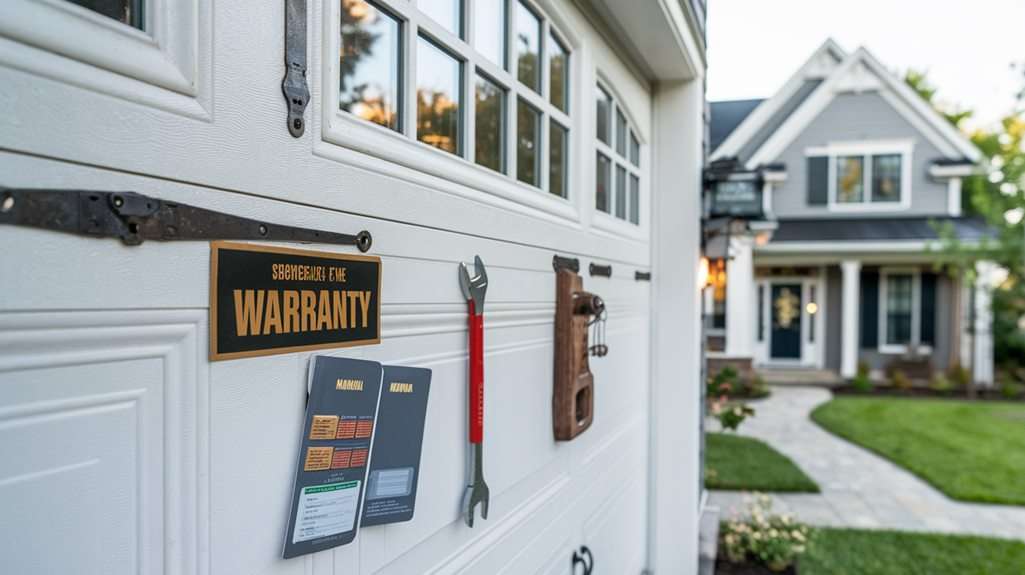
The three warranties on one door
When a homeowner in Henderson tells us “the door is under warranty,” the first question is which one. A new garage door installation stacks three pieces of paper. The door manufacturer (Amarr, Clopay, and Wayne Dalton are the brands on most valley homes) warrants the sections, the finish, and the factory hardware. The opener manufacturer (LiftMaster, Chamberlain, Genie, and others) warrants the motor, the board, and the accessories separately. The installer warrants the labor. Each has its own length, exclusions, and claim process, and a failure usually falls under only one of them.
Manufacturer warranties on the door sections
This is the coverage that gets advertised, and it is worth reading closely.
- Sections against rust-through and delamination: commonly 10 years on entry-level steel doors and “limited lifetime” on mid-range and premium insulated doors. Limited lifetime means for as long as the original purchaser owns the home, with proof of purchase, and it typically covers the section only, not the labor to swap it, and not cosmetic surface rust from sprinkler overspray.
- Finish: the factory paint is usually covered against peeling and cracking for 5 to 10 years, sometimes longer on premium lines. Fading and chalking from UV are frequently excluded or limited, which matters on a west-facing door in Las Vegas. Painting the door yourself, especially a darker color, generally ends finish coverage and can end section coverage on insulated doors because dark colors cause bowing.
- Windows and glass: typically 1 to 5 years against seal failure and fogging.
- Hardware, hinges, rollers, tracks: typically 1 to 3 years.
- Springs: the shortest and most misunderstood. Torsion springs are rated by cycles, usually 10,000 on builder-grade doors, and manufacturers typically warrant them for 1 to 3 years or not at all. A spring that breaks in year six has done exactly what it was rated for; see our guide to garage door component lifespans.
Most manufacturer warranties also require registration within 30 to 90 days of installation, apply only to the original owner, and may prorate the value after the first few years. If the installer did not register the door for you, do it yourself; the serial number is on a label inside an end stile or on the inside of the top section.
Opener warranties
Opener coverage is component based. A typical belt-drive residential opener from a major brand carries a lifetime warranty on the motor and belt, 5 years on parts including the logic board, and 1 year on accessories such as remotes, keypads, and the battery backup. Chain-drive units are often 10 years on the motor and 1 year on parts. Common exclusions that bite in Las Vegas: damage from electrical surges during summer thunderstorms (a plug-in surge protector at the ceiling outlet is cheap insurance), failures caused by an unbalanced or binding door that made the motor work too hard, and heat damage claimed on a unit installed in an unventilated garage that regularly passes 120 degrees, which some manufacturers argue is outside normal residential conditions. Keep the door balanced and the opener will see its full 10 to 15 years; details on replacements are on our garage door opener installation page.
Installer labor warranties
The manufacturer covers the part. Someone has to cover the hours to remove the failed part and install the new one, and that is the installer’s labor warranty. Across the industry it typically runs 90 days to 1 year on repairs and 1 year on new installations, though some companies offer longer terms on their own installations. Supreme Garage Doors backs both parts and labor on the work we do; the exact terms are written on your quote before work starts, so you can compare them line by line with any other bid. When you get a quote from anyone, ask three things: how long is the labor warranty, does it cover a return trip if a replaced spring or cable fails, and is it in writing.
What voids a garage door warranty in Las Vegas
- Repainting, particularly in a dark color on an insulated door. Check the finish warranty before you pick up a roller; our guide to painting a garage door in Las Vegas covers what is safe.
- DIY spring or cable work. Adjusting torsion springs yourself ends hardware coverage on most doors and, more importantly, is the most dangerous job in the garage.
- Running an opener on an unbalanced door. If a spring has weakened and the opener has been dragging the door for months, the opener maker may deny a motor or gear claim.
- Sprinkler overspray rust. Rust that starts on the outside of the bottom section where irrigation hits it is treated as environmental damage, not a defect. Aim the heads away from the door.
- Storm and vehicle damage. A monsoon microburst that folds a door or a bumper that bends the bottom section is an insurance matter, not a warranty matter.
- No maintenance record. Annual service receipts are the easiest way to defeat a “lack of maintenance” denial.
- Unlicensed installation. Some manufacturers honor full coverage only when a licensed dealer installs the door. In Nevada you can confirm any contractor’s license on the Nevada State Contractors Board website before signing.
How to make a claim
- Find the paperwork: the installer’s invoice with the date, and the door or opener model and serial number.
- Photograph the failure before anyone touches it, including a wide shot showing the whole door.
- Call the installer first. On a door still inside the labor warranty the installer handles the manufacturer claim; on an older door they can still process the part claim for you, with labor billed separately.
- Expect 1 to 3 weeks for a replacement section to arrive from the manufacturer; hardware and opener parts are faster. In the meantime, do not operate a door with a broken spring or a cracked section.
- Keep the denial letter if a claim is refused. Many denials cite a missing registration or a missing maintenance record, and both can sometimes be corrected.
Warranty versus replacement: the year 15 question
By year 12 to 15 on a builder-grade door, the section warranty has usually run out or excludes what is failing, the opener is at the end of its life, and the springs are on their second set. At that point a major repair on a 24-gauge non-insulated door buys a year or two. A new insulated steel door comes with a fresh limited lifetime section warranty, a new opener warranty if you replace both, and an installer labor warranty, and a west-facing garage runs 15 to 25 degrees cooler. Our garage door installation page and our comparison of garage door styles cover the options.
Questions to ask before you sign a quote
- How many years on the sections, the finish, the hardware, and the springs, separately?
- Are the springs standard 10,000 cycle or high-cycle, and does the price change?
- How long is the labor warranty, and does it include return trips?
- Who registers the door and opener with the manufacturer?
- Does the warranty transfer if I sell the house?
- Is all of this written on the quote?
When to call Supreme Garage Doors
Call (702) 356-1697 if a part has failed and you are not sure who covers it, if you need a claim processed on a door another company installed, or if you want a written quote that spells out parts and labor coverage before any work starts. Supreme Garage Doors answers 24/7 and serves Las Vegas, Henderson, North Las Vegas, and Whitney. Broken springs and cables are handled by our garage door spring repair team, and everything else by garage door repair, with the warranty terms on every invoice.
Frequently asked questions
Are garage door springs covered under warranty?
Usually for a short period only. Manufacturers typically warrant torsion springs for 1 to 3 years, and some exclude them entirely because springs are rated by cycles, commonly 10,000 on builder-grade doors. A spring that breaks after 5 to 7 years of normal use has met its rating. Installers often warrant a replacement spring separately, so ask for the term in writing.
Does painting my garage door void the warranty?
It commonly ends the finish warranty, and on insulated doors a dark color can also void section coverage because heat buildup bows the panels. Repainting the same light color with proper prep is lower risk but still outside most finish warranties. Check the manufacturer’s terms before painting, and prefer a factory-finished door if you want a dark color.
Does a garage door warranty transfer when I sell my house?
Limited lifetime section warranties almost always apply to the original purchaser only and end at sale, though some manufacturers offer a shorter transferable term. Opener and hardware warranties may transfer within their stated years. Leave the invoice and registration with the buyer either way; the labor warranty depends on the installer’s terms.
What does limited lifetime mean on a garage door?
It means the manufacturer will replace a section that rusts through or delaminates for as long as the original buyer owns the home, subject to registration and proof of purchase. It does not cover labor, cosmetic rust from sprinklers, fading, dents, or damage from paint, vehicles, or storms, and it typically excludes springs, rollers, and other wear items after 1 to 3 years.
Does the opener warranty cover a power surge?
Almost never. Surge damage from summer thunderstorms is treated as an external cause, so a fried logic board after a storm is usually paid out of pocket, or becomes the trigger to replace an opener over 12 years old. A plug-in surge protector on the ceiling outlet is the cheapest protection available.
What if the company that installed my door has gone out of business?
The manufacturer warranty on the sections and the opener still stands, because it is with the manufacturer, not the installer. Any licensed garage door company can diagnose the failure, submit the part claim with your invoice and serial number, and install the replacement, with labor billed separately since the original labor warranty ended with that company.
One Response