Have you ever noticed how your garage door behaves differently during extreme weather? From sweltering heat to frigid cold, these conditions can lead to unexpected issues like misalignment or rust. You might think regular maintenance is enough, but the impact of humidity and moisture can complicate matters further. As you consider your own garage door's performance, you'll want to explore the effects of rain, snow, and wind, and how they can compromise structural integrity over time. Understanding these factors can help you take proactive steps to ensure your garage door remains functional. What are the signs of weather-related damage you should watch for?
Key Takeaways
- Extreme temperatures can cause garage doors to warp, crack, or become sluggish, affecting their operation and efficiency.
- High humidity can lead to rusting of metal parts and warping of wooden doors, necessitating regular maintenance.
- Rain and snow can cause moisture accumulation, resulting in rust, misalignment, and operational issues with garage door sensors.
- Wind pressure can stress and damage garage doors, compromising their structural integrity and weather seals over time.
- Regular inspections and maintenance, including lubrication and seal checks, are essential to prevent weather-related damage.
Effects of Extreme Temperatures
Extreme temperatures can really take a toll on your garage door. When it's scorching hot, the materials in your door can expand, leading to warping or misalignment. If you've got a wooden door, it's especially vulnerable; the heat can cause the wood to crack or split.
On the flip side, freezing temperatures can make your garage door sluggish and even cause the springs to lose tension. You might notice that it struggles to open or close properly during those chilly months. Proper maintenance is crucial to combat these issues and ensure Supreme Garage Door emphasizes the importance of maintenance for reliable performance.
Additionally, extreme cold can lead to brittle materials, which could result in cracks or breaks. In both scenarios, the door's insulation might also suffer, reducing its energy efficiency and raising your utility bills. If your garage door has windows, you'll want to keep an eye on them, too. The intense heat can weaken the seals, leading to condensation or fogging.
To combat these issues, consider regular maintenance checks, ensuring your door's hardware stays lubricated and functional. By staying proactive, you can help your garage door withstand the challenges posed by extreme temperatures, extending its lifespan and keeping it operating smoothly.
Humidity and Moisture Challenges
Humidity and moisture can wreak havoc on your garage door. Garage door issues such as rust and corrosion developing on metal parts are common in humid environments. Wooden doors can also expand and shrink with changing humidity levels, affecting their performance. Keeping up with lubrication and regular maintenance, as recommended by Garage Door Repair experts, is essential to prevent these issues and ensure your garage door operates smoothly.
Rust and Corrosion Risks
When it comes to garage doors, rust and corrosion are serious threats that arise from high humidity and moisture levels. These issues can lead to significant damage, compromising not only the appearance of your door but also its functionality. To help you understand the risks, here are three key factors to consider:
- Material Matters: Steel doors are particularly vulnerable to rust, especially if they lack a protective coating. If you have a steel garage door, regular inspections are essential.
- Water Accumulation: Puddles near your garage can accelerate corrosion. Ensure proper drainage around your garage to keep moisture away from the door and its components.
- Regular Maintenance: Neglecting your garage door can lead to rust formation. Regularly lubricate moving parts and check for signs of corrosion, addressing any issues promptly.
Wood Expansion and Shrinking
As moisture levels fluctuate, wood garage doors can expand and shrink, leading to potential issues that affect their performance and appearance.
When humidity rises, the wood absorbs moisture, causing it to swell. This can result in a tight fit within the frame, making it difficult to open and close the door smoothly. You might notice sticking or even warping, which can compromise the door's integrity.
On the flip side, when humidity drops, the wood loses moisture and contracts. This shrinkage can create gaps between the door panels, allowing drafts and pests to enter your garage. Over time, these changes can lead to cracks or splintering, diminishing the door's aesthetic appeal and structural strength.
To mitigate these challenges, consider installing a weather seal to minimize moisture exposure. Regular inspections will also help you catch any early signs of damage caused by moisture fluctuations.
Lubrication and Maintenance Needs
Maintaining your garage door's functionality requires regular lubrication, especially in areas with fluctuating humidity and moisture levels. Humidity can lead to rust and corrosion, which hampers the door's operation. Therefore, you need to address lubrication and maintenance proactively.
Here are three key steps to ensure your garage door performs well despite moisture challenges:
- Choose the Right Lubricant: Use a silicone-based lubricant or a lithium grease, as they resist moisture better than oils. This helps protect metal components from rust.
- Regularly Inspect Components: Check the rollers, hinges, and tracks for signs of wear or moisture damage. Cleaning these parts before applying lubricant ensures a smooth operation.
- Schedule Maintenance: Make it a habit to lubricate your garage door every six months, or more frequently in humid conditions. This keeps the door functioning smoothly and extends its lifespan.
Impact of Rain and Snow
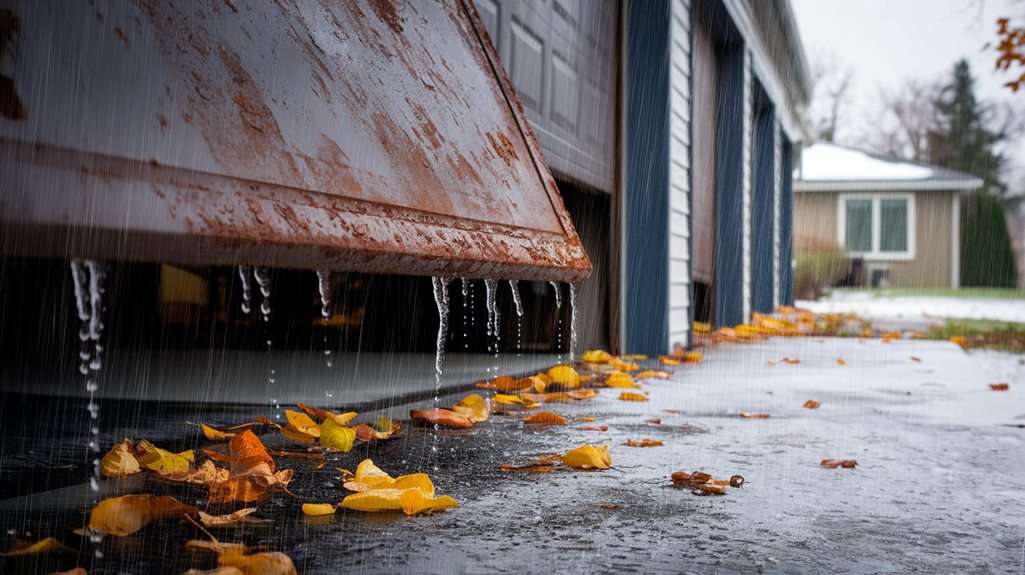
How do rain and snow affect your garage doors? Both can create significant challenges that hinder their performance and longevity. When rainwater seeps into the door's mechanisms, it can lead to rust and corrosion over time. Snow buildup can also cause issues, especially if it accumulates around the door's base, preventing proper sealing.
Here's a quick look at the impacts of rain and snow on your garage doors:
| Weather Condition | Impact on Garage Doors |
|---|---|
| Rain | Causes rust and corrosion |
| Snow | Leads to ice formation, hindering operation |
If you're not careful, these conditions can even lead to malfunctioning sensors or misalignment. It's essential to keep the area around your garage door clear of debris and snow, ensuring that moisture doesn't accumulate. Regularly inspect the door seals and tracks for water damage or ice buildup. By being proactive, you can minimize the negative effects of rain and snow, ensuring your garage door operates smoothly and efficiently, regardless of the weather.
Wind and Structural Integrity
When it comes to garage doors, wind pressure can significantly impact their structural integrity. You need to consider the resilience of the materials used and how well they're installed to withstand strong gusts. Understanding these factors will help ensure your garage door remains secure and functional in windy conditions.
Wind Pressure Effects
Wind pressure can significantly impact the structural integrity of garage doors, especially during storms or high-wind events. When strong winds hit, they create pressure differences that can stress your garage door. If your door isn't designed to withstand these forces, it could warp, buckle, or even detach from its tracks.
Here are three effects of wind pressure you should consider:
- Increased Load: Wind pressure adds extra weight to your garage door. If it's not properly reinforced, the door may struggle to open or close, leading to potential damage.
- Seal Integrity: High winds can compromise the seals around your garage door. If these seals fail, water and debris can enter, causing further issues with your garage's interior.
- Structural Damage: Prolonged exposure to intense wind can weaken the door's frame and hardware. This could result in costly repairs or replacements down the line.
Material Resilience Considerations
Understanding the materials used in your garage door is vital for ensuring its resilience against wind and other environmental stresses. Various materials offer different levels of strength and durability, which directly affect how well your door withstands harsh weather.
For instance, steel doors are generally robust, providing excellent wind resistance. However, the thickness of the steel plays a crucial role; thinner panels might buckle under severe pressure.
Wooden doors, while attractive, can warp or crack when exposed to extreme conditions. If you opt for a wood door, consider investing in one with a solid core for added strength.
Fiberglass doors are another option, offering a balance of durability and lightweight design, but they can be prone to dents in high winds.
Additionally, the door's construction matters. Look for features like reinforced panels and strong seals that can help maintain structural integrity. Keep in mind that even with resilient materials, regular maintenance is essential. Inspect your door for signs of wear and tear, and address any issues promptly to ensure it remains sturdy against wind and environmental challenges.
Installation Stability Factors
To ensure your garage door remains stable during adverse weather conditions, proper installation is crucial. A well-installed garage door not only enhances its performance but also protects your home from wind damage and other structural issues. Here are three key factors to consider for installation stability:
- Frame Integrity: Make sure the frame is level and securely anchored to the building structure. A solid foundation prevents shifting during strong winds.
- Weatherstripping: Install high-quality weatherstripping around the door. This helps seal gaps, keeping wind, rain, and debris out, which minimizes stress on the door itself.
- Bracing and Reinforcement: Use diagonal bracing and additional reinforcements to add strength. This is especially important for larger doors that face high wind areas, ensuring they can withstand pressure without warping or failing.
Seasonal Maintenance Tips
As the seasons change, your garage door requires regular maintenance to ensure it operates smoothly and efficiently. Start by inspecting the door's weather seals. If you notice any cracks or gaps, replace them to prevent drafts and moisture from entering your garage.
Next, lubricate the moving parts, including rollers, hinges, and tracks. This simple step helps reduce friction and keeps the door operating quietly.
During the fall, make sure to clean out any debris from the tracks and around the door. Leaves and dirt can obstruct the door's movement, leading to potential damage.
In winter, check the door for ice buildup. If you see any, gently remove it to avoid straining the door mechanism.
As spring approaches, test the door's balance. Disconnect the opener and manually lift the door halfway. If it doesn't stay in place, it may need adjustment.
Signs of Weather-Related Damage
Weather-related damage can manifest in various noticeable ways, and recognizing these signs early can save you from costly repairs. Pay attention to the following indicators that your garage door may have suffered from the elements. Additionally, regular maintenance checks by certified technicians can help identify and prevent weather-related issues:
- Rust or Corrosion: If you spot rust on metal components or corrosion around the hinges, it's a clear sign that moisture has taken its toll. This can weaken the structural integrity of the door.
- Uneven Movement: If your garage door starts to open or close unevenly, it might be due to warping caused by temperature fluctuations. This can lead to further mechanical issues if not addressed promptly.
- Cracks or Splits: Inspect wooden garage doors for cracks or splits. Extreme weather conditions, like intense heat or freezing cold, can cause wood to expand and contract, resulting in damage.
Long-Term Solutions for Durability
Investing in long-term solutions for your garage door can significantly enhance its durability against the elements. One of the best ways to ensure your door's longevity is to choose high-quality materials. Opt for doors made from steel or fiberglass, as they offer better resistance to moisture and temperature fluctuations compared to wood.
Regular maintenance is also key. Lubricate moving parts, inspect seals, and clean the door to prevent rust and wear. Consider weather stripping to keep out drafts and moisture, which can lead to damage over time.
Another effective strategy is to install insulation. Insulated garage doors not only improve energy efficiency but also provide additional protection against extreme temperatures, reducing the risk of warping or cracking.
Lastly, consider a protective coating. Applying a weather-resistant paint or sealant can shield your garage door from harmful UV rays and moisture.