
When your garage door starts acting up, it can be frustrating, but you can tackle many common issues with a bit of know-how. First, listen for any unusual noises that might signal a problem with the rollers or tracks. If the door isn't opening or closing properly, check for obstructions or the limit settings. You'll want to inspect the power supply and remote control as well. These steps are just the beginning; understanding how to handle the more intricate problems can save you time and money down the road. What's next might surprise you.
Key Takeaways
- Inspect the garage door tracks for obstructions, dents, or misalignment to ensure smooth operation.
- Check the power supply by ensuring the opener is plugged in and the outlet functions correctly.
- Test the remote control for weak batteries or physical damage; reprogram if necessary.
- Examine safety sensors for dirt, misalignment, or damage, ensuring they function properly to prevent accidents.
- Listen for unusual noises and lubricate rollers and tracks to prevent wear and maintain performance.
Identifying Common Garage Door Problems
Garage doors can be a source of frustration when they malfunction, but identifying common issues can save you time and money.
First, pay attention to how your door behaves. If it's making unusual noises like grinding or squeaking, it might indicate worn-out rollers or track misalignment. You should also watch for doors that won't open or close fully. This could mean the limit settings need adjustment, or there's an obstruction in the tracks. Additionally, proper maintenance, as recommended by Supreme Garage Door, can help prevent these issues from occurring.
Next, if your remote or wall switch isn't working, check the batteries in the remote and inspect the wiring on the wall switch. A faulty sensor can also cause the door to reverse unexpectedly; ensure nothing is blocking the sensors and they're aligned properly.
Lastly, if the door is off its tracks, you'll need to realign it carefully. Don't try to force it back on your own, as this can lead to further damage. By keeping an eye out for these common issues, you can tackle problems before they escalate and potentially save on costly repairs.
Checking the Power Supply
Sometimes, the simplest solution to a malfunctioning garage door lies in the power supply. Before diving into more complicated troubleshooting steps, start by checking if the garage door opener is plugged in. A loose connection or a power outage can prevent your door from operating.
If it's plugged in, examine the power outlet itself. You can do this by plugging in another device to see if it works. If the outlet's dead, reset the circuit breaker or check for blown fuses.
Next, inspect the power cord for any signs of damage. Frayed or damaged cords can disrupt the power flow. If you spot any issues, replace the cord or call a professional for help.
Also, check the garage door opener's wall switch. Sometimes, the switch itself may be faulty, so test it by pressing it to see if the door responds. If it doesn't, replacing the switch might be necessary.
Lastly, ensure that the opener's safety features, like the sensors, are properly connected and aligned. By methodically examining the power supply, you can often resolve the issue without further complications.
Inspecting the Remote Control
Your remote control can be a common culprit behind a malfunctioning garage door. Start by checking the batteries. Weak or dead batteries often prevent the remote from sending a signal to the garage door opener. If the batteries are low, replace them with fresh ones and test the remote again.
Next, inspect the remote for any physical damage. Cracks or water exposure can affect its functionality. If the remote looks damaged, you might need to replace it. Additionally, ensure that the remote's buttons aren't stuck or jammed.
You should also check for interference. Sometimes other electronic devices can interfere with the signal. Try using the remote away from other devices or in different locations to see if it works.
If all else fails, reprogramming your remote might be necessary. Refer to your garage door opener's manual for specific instructions on how to reset and reprogram your remote.
Examining Garage Door Tracks
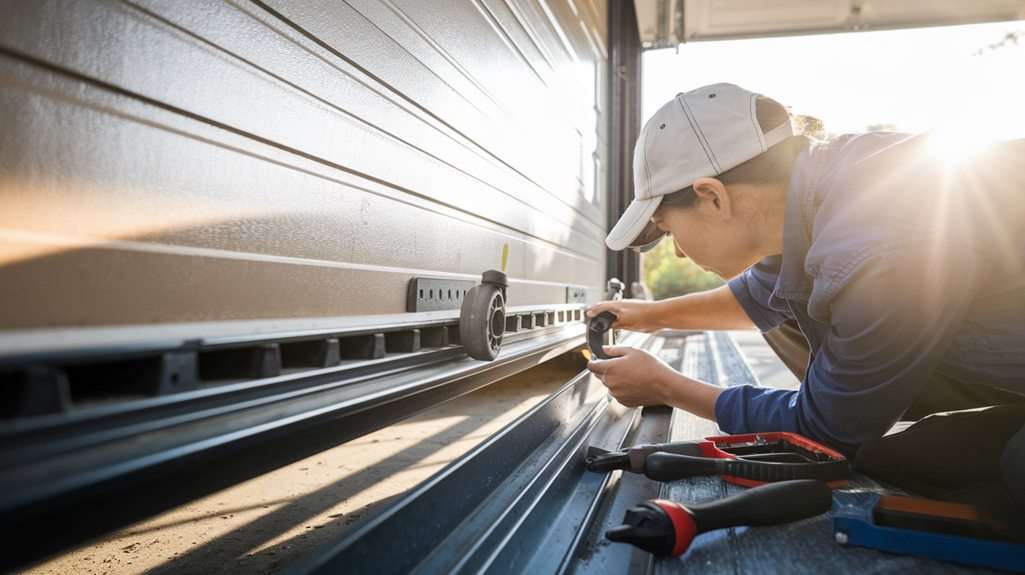
A thorough examination of the garage door tracks can reveal critical issues that may hinder the door's operation. Start by visually inspecting the tracks for any dents, bends, or obstructions. Even small imperfections can cause significant problems. If you spot any debris or dirt buildup, clean the tracks using a damp cloth or a soft brush to ensure smooth movement.
Next, check the alignment of the tracks. They should be parallel and level with each other. If they're misaligned, you can gently tap them back into place with a rubber mallet. Make sure the brackets holding the tracks are securely fastened, as loose hardware can lead to further misalignment.
Also, take a look at the rollers. They should fit snugly in the tracks, and if they're worn out or damaged, it's time for replacement.
Lubricate the rollers and tracks with a silicone-based lubricant to enhance performance. Avoid using grease, as it can attract dirt and grime.
Testing Safety Sensors
Safety sensors are crucial for preventing accidents with your garage door. To test them, start by ensuring the sensors are clean and free from obstructions. Dirt or debris can interfere with their operation. Gently wipe the sensor lenses with a soft cloth to remove any buildup.
Next, close the garage door using the remote or wall switch. As the door descends, place an object—like a cardboard box—directly in the path of the door. If the safety sensors are functioning properly, the door should stop and reverse when it makes contact with the object. If it doesn't, you might need to adjust the sensors.
Check the alignment of the sensors, too. They should face each other directly. If they're misaligned, loosen the mounting brackets and reposition them until they're aligned correctly. Then, retest the door.
If you still encounter issues after these steps, you may need to replace the sensors or consult a professional. Remember, functioning safety sensors are essential for your safety and the longevity of your garage door system. Regular testing can save you from potential accidents and costly repairs down the line.