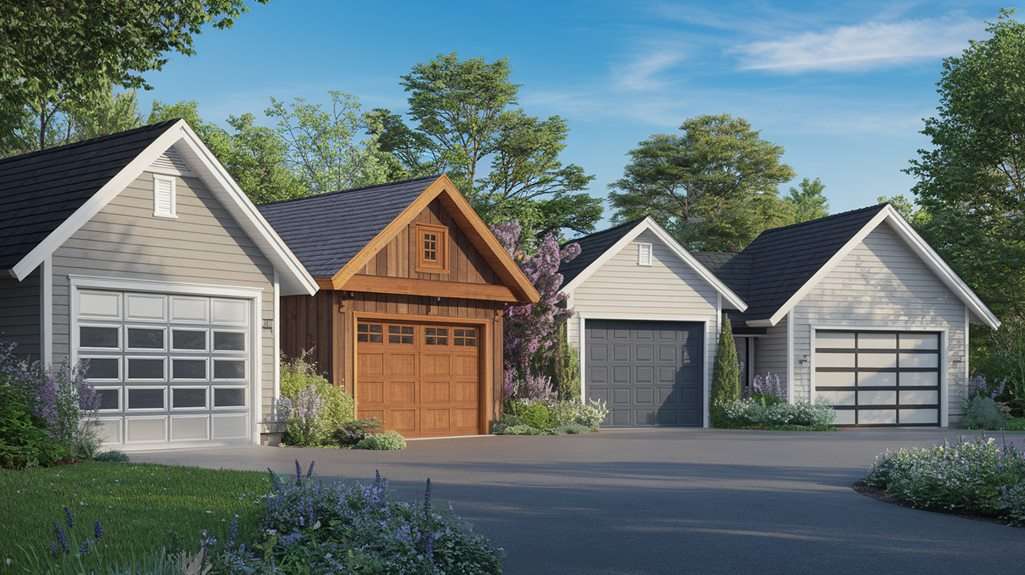
You might think that choosing a garage door material is simply about aesthetics, but the truth is, it's also about performance and longevity. Each option—be it wood, steel, fiberglass, or aluminum—comes with its own set of benefits and challenges that can affect your home's overall efficiency and style. As you consider your needs, you'll want to weigh factors like durability, maintenance, and insulation. So, what's the best choice for you? The answer might not be as straightforward as you expect.
Key Takeaways
- Consider durability and maintenance; steel is low-maintenance, while wood requires regular upkeep to prevent deterioration.
- Evaluate insulation properties; fiberglass and steel offer excellent insulation, enhancing energy efficiency in your garage.
- Think about aesthetic preferences; wood provides a classic look, while aluminum and fiberglass offer modern styles.
- Assess your budget; steel is typically more affordable, but custom designs in wood can increase costs significantly.
- Factor in climate conditions; choose materials like aluminum or steel for harsh weather resistance and longevity.
Overview of Garage Door Materials
When considering garage doors, it's essential to understand the various materials available today. Each material offers unique benefits and drawbacks, impacting everything from aesthetics to maintenance.
Steel is a popular choice due to its durability and resistance to dents and rust. It's often available in various styles and colors, making it easy to match your home's exterior.
On the other hand, aluminum is lightweight and resistant to corrosion, but it may not offer the same level of insulation as other materials.
Fiberglass is another option, known for its ability to mimic the look of wood while being more resistant to elements. It's a great choice if you want the appearance of wood without the upkeep.
Vinyl garage doors are gaining popularity for their low maintenance and resistance to fading. They come in various designs and colors, but they may not be as sturdy as steel or fiberglass.
Finally, wood is revered for its classic appeal but requires regular maintenance to prevent warping and rotting.
Choosing the right material depends on your budget, aesthetic preferences, and maintenance willingness, so weigh your options carefully before making a decision.
Advantages of Wood Garage Doors
Wood garage doors offer a timeless elegance that can enhance the curb appeal of any home. Their natural beauty and craftsmanship can make your property stand out in the neighborhood. When you choose wood, you're not just opting for a door; you're investing in a masterpiece that tells a story.
Here's a quick comparison of the emotional and aesthetic benefits of wood garage doors:
| Advantages | Emotional Appeal |
|---|---|
| Unique, handcrafted designs | A sense of pride in homeownership |
| Natural insulation properties | Comfort and warmth for your family |
| Customizable finishes | Personal expression and individuality |
Wood garage doors can also evoke nostalgia, reminding you of classic homes and cozy cabins. They can be painted or stained in various colors, allowing you to match your home's exterior seamlessly. Plus, wood provides good insulation, helping to keep your garage comfortable year-round.
While maintenance is necessary, the rewards are worth it. With the right care, wooden doors can last for decades, maintaining their charm and adding value to your home. So, if you're looking for a stunning, warm option, wood garage doors are definitely a choice worth considering.
Benefits of Steel Garage Doors
Steel garage doors are a popular choice for homeowners seeking durability and low maintenance. One of the main benefits is their strength. Steel doors can withstand harsh weather conditions, resist dents, and hold up against potential damage from impacts. This durability means you won't have to worry as much about repairs or replacements over time.
Additionally, steel garage doors from Supreme Garage Door come with comprehensive maintenance services to ensure long-term performance.
Another advantage is their low maintenance requirements. Unlike wood doors that may need regular painting or staining, steel doors typically just require occasional cleaning to maintain their appearance. This saves you time and effort in the long run.
Steel garage doors also offer excellent insulation options. Many come with insulated cores that help regulate the temperature in your garage, making it more energy-efficient. This is particularly beneficial if you use your garage for more than just parking your car.
Exploring Fiberglass Options
Fiberglass garage doors present an appealing alternative for those seeking a blend of aesthetic appeal and functionality. They're lightweight, resistant to dents, and offer excellent insulation properties, making them a practical choice for many homeowners. You'll appreciate the versatility of fiberglass doors, as they come in various styles and finishes that can mimic wood, adding a classic touch to your home's exterior.
Here's a quick comparison of some key features of fiberglass garage doors:
| Feature | Advantage | Consideration |
|---|---|---|
| Weight | Easy to operate | May require sturdy tracks |
| Insulation | Energy efficient | Installation complexity |
| Design Options | Customizable aesthetics | Potential for fading |
| Maintenance | Low upkeep needed | Cleaning may be required |
| Durability | Resistant to rust and decay | Impact resistance varies |
Comparing Aluminum Garage Doors
When it comes to selecting garage doors, aluminum options stand out for their combination of strength and lightweight design. These doors are less prone to warping or cracking compared to wood, making them a durable choice for various climates. Plus, their lightweight nature means they're easier to operate, reducing wear on your garage door opener.
Another appealing aspect of aluminum garage doors is their modern aesthetic. They come in various styles and finishes, allowing you to complement your home's exterior easily. Whether you prefer a sleek, contemporary look or a more traditional appearance, there's likely an aluminum option that fits your vision.
Aluminum also offers excellent insulation properties, especially when you choose doors with solid core materials. This feature can help maintain your garage's temperature, potentially reducing energy costs.
However, keep in mind that while aluminum is resistant to rust, it can be prone to dents. If you live in an area with severe weather or heavy traffic, this might be a consideration for you.
Maintenance Requirements for Each Material
Choosing the right material for your garage door isn't just about aesthetics and durability; it also involves understanding the maintenance requirements of each option. Different materials come with varying needs, and knowing these can save you time and effort down the road.
If you opt for wood, expect to invest time in regular painting or staining to prevent rot and warping. A well-maintained wood door can last a long time, but neglect can lead to costly repairs.
On the other hand, steel doors require less upkeep. They may need occasional painting to prevent rust, but overall, their durability makes them a low-maintenance choice.
Aluminum doors are similar in maintenance to steel, often requiring just a simple wash to keep them looking good.
Fiberglass doors are quite resilient, needing minimal care, but be cautious of scratches that may require touch-ups.
Cost Considerations for Garage Doors
Cost is a crucial factor to consider when selecting a garage door, as it can vary significantly based on material, style, and features. You'll want to set a budget before diving into your options to ensure you find the right fit for your needs. Here are three key factors that influence garage door costs:
- Material: Different materials carry different price tags. For instance, steel doors are generally more affordable than wood or fiberglass, but they may lack some aesthetic appeal.
- Style: The design of the door can also impact the price. Custom doors or those with intricate designs will typically cost more than standard options.
- Features: Additional features, like insulation, windows, and smart technology, can add to the overall cost. While they improve functionality, you should weigh their value against your budget.
Keep these factors in mind as you evaluate your options. By doing so, you'll be better equipped to choose a garage door that meets both your aesthetic desires and financial constraints.