
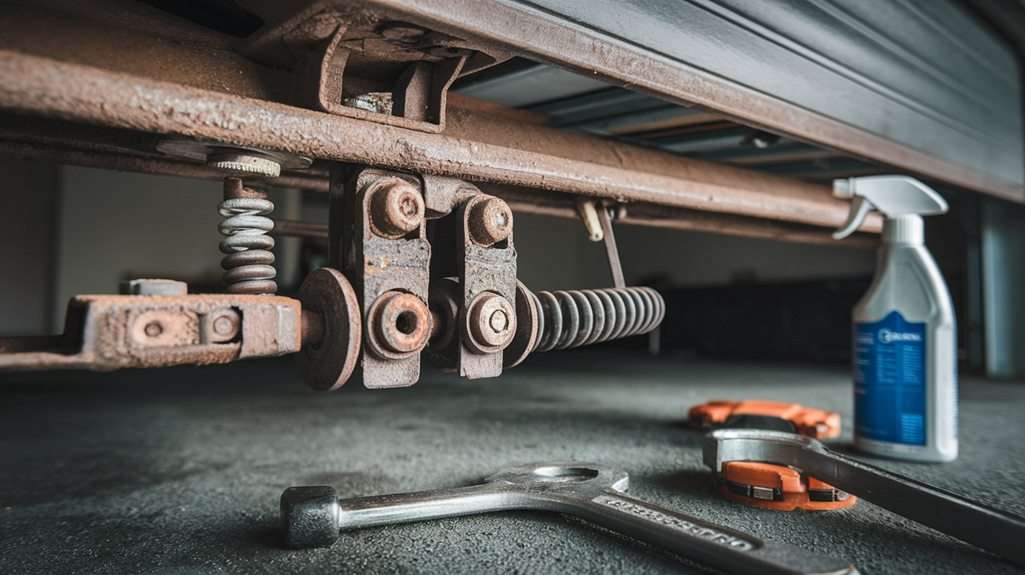
If you've noticed your garage door making more noise than usual, you're not alone. Common culprits include worn-out rollers, loose hardware, or even misaligned tracks. These issues can not only be annoying but may also lead to more significant problems if left unaddressed. By taking the time to inspect and maintain your garage door, you can reduce that racket and extend its lifespan. But what specific steps should you take to tackle these issues effectively? Let's explore the most effective solutions to quieten your garage door and keep it functioning smoothly.
Key Takeaways
- Worn out rollers can cause noise; replace them with metal rollers and lubricate with silicone-based lubricant for quieter operation.
- Regularly check and tighten loose hardware, including screws and brackets, to minimize noise from the garage door.
- Ensure proper lubrication with silicone-based sprays or lithium grease to reduce noise and extend the lifespan of the garage door.
- Misaligned tracks lead to noisy operation; realign tracks and lubricate to ensure smooth movement and reduce wear on rollers.
- Damaged springs can create loud noises; inspect and replace springs regularly for safe and quiet garage door operation.
Worn Out Rollers
Worn out rollers often contribute significantly to a noisy garage door. Over time, the rollers can wear down, causing them to lose their smooth operation. When this happens, you'll likely hear grinding or squeaking noises every time you open or close the door. It's frustrating, but you can tackle this issue head-on.
First, inspect your rollers. Look for any signs of damage, such as cracks, chips, or excessive wear. If you notice any of these issues, it's time to replace them.
You can choose from plastic or metal rollers, but metal ones generally last longer and operate more quietly.
When you replace the rollers, make sure to disconnect the garage door opener to ensure your safety. Remove the old rollers and slide in the new ones, ensuring they're properly aligned with the tracks.
Lubricate the new rollers with a silicone-based lubricant to keep them functioning smoothly.
Regular maintenance is key, so check your rollers periodically to catch any wear early. By addressing worn out rollers promptly, you'll enjoy a quieter garage door and extend its lifespan.
Loose Hardware
One common culprit behind a noisy garage door is loose hardware. Over time, the constant movement of your garage door can cause screws, bolts, and nuts to become loose. When this happens, you might hear rattling, clanking, or other unwanted sounds as the door operates. It's essential to check the hardware regularly to keep your garage door functioning smoothly and quietly. Proper maintenance, as advised by Supreme Garage Door, can help address loose hardware and ensure optimal performance.
To start, inspect the door's hinges, brackets, and tracks for any visible signs of looseness. Use a socket wrench or screwdriver to tighten any loose screws or bolts you find. Don't forget to check the roller brackets as well; they often require a quick tightening to eliminate noise.
Next, pay attention to the springs. If they seem loose, it's crucial to call a professional, as they can be dangerous to handle.
Make sure you go through this maintenance check at least once a year. By addressing loose hardware promptly, you can significantly reduce noise and prolong the life of your garage door. Remember, a small effort now can save you from bigger issues down the road!
Lack of Lubrication
If your garage door is making more noise than usual, a lack of lubrication might be the culprit. Regularly applying the right lubrication products can significantly reduce those annoying sounds and extend the life of your door.
Let's explore the importance of keeping your garage door well-lubricated and which products work best.
Importance of Regular Lubrication
Regular lubrication is essential for keeping your garage door operating smoothly and quietly. When you neglect this simple task, your door can develop annoying squeaks and rattles that not only disrupt your peace but also indicate wear and tear on the components. Without proper lubrication, friction increases, leading to potential damage and costly repairs.
To understand the impact of lubrication, consider the following table that highlights the benefits of regular maintenance:
| Lubrication Benefit | Consequence of Neglect |
|---|---|
| Reduces Noise | Increased Squeaking |
| Extends Door Lifespan | Premature Wear and Tear |
| Enhances Performance | Sluggish Operation |
Recommended Lubrication Products
When it comes to maintaining a quiet and efficient garage door, choosing the right lubrication products is crucial. You'll want to invest in high-quality lubricants specifically designed for garage door components. Look for silicone-based sprays, as they provide excellent lubrication without attracting dust and dirt. These sprays can easily penetrate tight spaces, ensuring all moving parts are well-coated.
Another great option is lithium grease, which is thicker and ideal for hinges, rollers, and tracks. It offers long-lasting protection and minimizes wear and tear over time. Just be careful not to overapply it, as excess grease can accumulate dirt and grime.
For chain-driven doors, consider using a heavy-duty chain lubricant. These products are designed to withstand the rigors of constant movement while preventing rust and corrosion.
Avoid using WD-40 or similar penetrating oils for regular lubrication. While they can be handy for loosening stuck parts, they don't provide the long-term lubrication your garage door needs.
Misaligned Tracks
If your garage door is making unusual noises, misaligned tracks might be the culprit. When the tracks aren't properly aligned, it can lead to increased roller wear and tear, causing those irritating sounds.
Addressing track alignment issues is crucial for ensuring your door operates smoothly and quietly.
Track Alignment Issues
One of the top reasons garage doors make noise is due to misaligned tracks. When the tracks that guide your garage door become misaligned, it can create friction and cause the door to rattle or squeak as it moves. You might notice these issues when opening or closing your door, which can lead to frustration.
Here are four signs that your tracks may be misaligned:
- Door Sticks or Jams: If your garage door struggles to move smoothly, it could be a sign of misalignment.
- Visible Gaps: Look for gaps between the door and the tracks. If you see any, it's likely that the tracks are off.
- Unusual Noises: Listen for grinding or scraping sounds when operating the door. This could indicate that the door is rubbing against misaligned tracks.
- Worn Rollers: Check if the rollers seem to be unevenly spaced along the track, which can contribute to noise and poor performance.
If you notice any of these signs, it's essential to realign the tracks to ensure smooth and quiet operation of your garage door.
Roller Wear and Tear
Often, roller wear and tear contributes significantly to noisy garage door operation. Over time, the rollers that guide your door can wear down, leading to misalignment and increased friction. When rollers become worn, they may not glide smoothly along the tracks, causing grinding or rattling noises as the door opens and closes.
To fix this issue, start by inspecting your rollers for signs of wear, such as cracks or flat spots. If you notice any damage, it's time to replace them. You can usually find replacement rollers at your local hardware store. When installing new rollers, ensure they fit snugly in the tracks, allowing for smooth movement.
If the rollers seem fine but the noise persists, check the alignment of the tracks. Misaligned tracks can cause additional strain on the rollers, leading to premature wear. Loosen the track brackets slightly, realign the tracks, and then retighten the brackets. This adjustment will help the rollers move freely.
Regular maintenance, including lubrication of the rollers and tracks, can also help reduce noise and prolong the lifespan of your garage door system. Keep your garage door operating quietly with these simple steps.
Damaged Springs
Garage doors rely on springs for smooth operation, and when these springs are damaged, you'll likely notice a significant increase in noise. Worn or broken springs can cause the door to creak, groan, or even slam shut. If you've been hearing these unsettling sounds, it's essential to assess the state of your springs.
Here are some signs that indicate your springs might be damaged:
- Visible Wear: Look for gaps or deformation in the springs. If they're showing signs of wear, it's time for replacement.
- Door Imbalance: If the door doesn't stay open or closes too quickly, the springs mightn't be functioning correctly.
- Loud Noises: Unusual sounds during operation, such as popping or snapping, often signal that the springs are under strain.
- Rust and Corrosion: If you spot rust on the springs, it can lead to further deterioration, impacting their performance.
If you notice these issues, addressing them promptly can prevent further damage and ensure your garage door operates quietly and efficiently. Always consult a professional for spring replacement, as they handle high tension and can be dangerous to manage alone.
Motor Issues
After checking your springs, if noise persists, the motor could be the culprit. Garage door motors can produce various sounds, ranging from grinding to squeaking. These noises often indicate that something's not quite right.
First, listen closely when you operate the door. If you hear a grinding noise, it might suggest that the motor's gears are worn out or misaligned. If you suspect motor issues, it's essential to address them promptly to ensure the smooth operation of your garage door system. Check for any loose or damaged components around the motor and tighten screws and bolts to eliminate unwanted sounds.
If you notice a squeaking noise, it could be a sign that the motor needs lubrication. Use a silicone-based lubricant on the moving parts to quiet things down.
Additionally, make sure the motor is mounted securely. Vibration from a loose motor can cause rattling sounds. If you've tried these fixes and the noise continues, it might be time to consult a certified technician. They can assess whether the motor needs repair or replacement. Addressing motor issues promptly not only reduces noise but also prolongs the lifespan of your garage door system.