
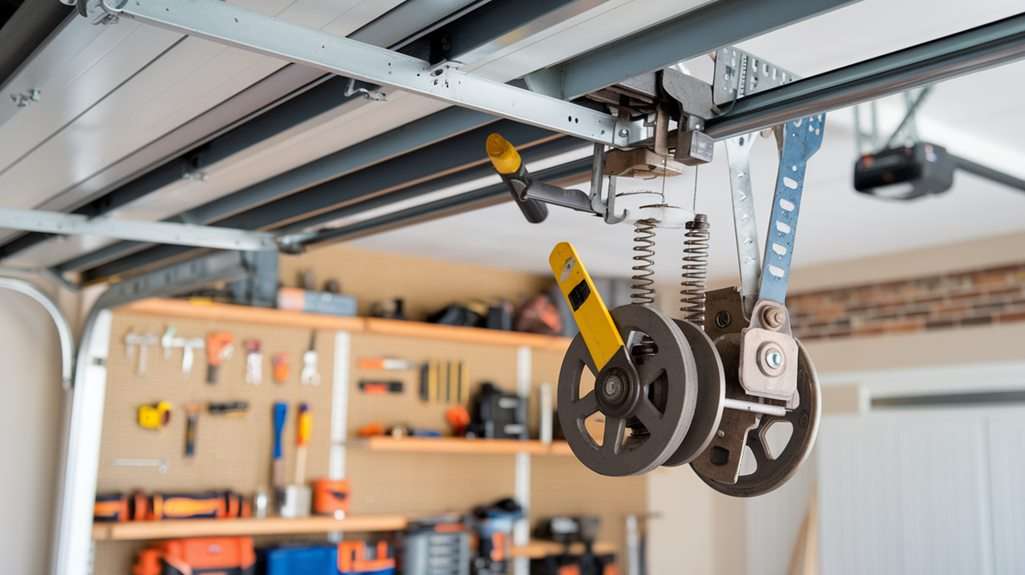
Your garage door is like the gateway to your home, and keeping it in harmony is essential for both functionality and security. To achieve this balance, you'll need to assess various components, from the door itself to the springs that support it. You might be surprised at how simple adjustments can make a significant difference. But before you jump into the process, understanding the tools and techniques required is crucial. Let's explore how you can ensure your garage door operates smoothly and efficiently, setting the stage for a safe and reliable entrance.
Key Takeaways
- Inspect the garage door for wear and damage, including springs, hinges, and tracks, to ensure safe operation.
- Manually lift the door halfway to check if it stays balanced; adjust spring tension if it doesn't.
- Use a level and tape measure to align the door and ensure it opens smoothly without excessive effort.
- Lubricate moving parts every 3-6 months to reduce friction and extend the door's lifespan.
- Regularly test the door's operation and safety features, including the auto-reverse mechanism and sensors, for optimal performance.
Understanding Garage Door Balance
Typically, a well-balanced garage door opens and closes smoothly, preventing unnecessary strain on the opener and components. Understanding garage door balance is crucial for both functionality and safety. When your door is balanced, it requires minimal effort from the opener, which extends its lifespan and reduces wear and tear.
To gauge balance, you'll want to disconnect the opener and manually lift the door halfway. If it stays in place, you're on the right track. If it drifts up or down, it's unbalanced. An unbalanced door can result from worn springs, misaligned tracks, or damaged rollers. Each of these issues can lead to more significant problems if left unaddressed.
You should also be aware that a properly balanced door enhances energy efficiency. When the door operates smoothly, it seals better, helping to regulate your garage's temperature. This balance affects not just the door's operation but also the overall security of your garage. A door that's hard to operate may be more vulnerable to unauthorized access.
In short, maintaining balance is essential for your garage door's performance, longevity, and security. Keep an eye on this aspect to ensure everything runs seamlessly.
Tools You Will Need
To balance your garage door effectively, you'll need a few specific tools at your disposal.
First, grab a pair of sturdy gloves to protect your hands while you work. Safety goggles are also essential to shield your eyes from any flying debris. A tape measure will help you determine the door's height and ensure proper alignment.
Next, you'll want a level to check that your door is perfectly balanced. A standard carpenter's level will do the trick, but a laser level can provide even more precision.
You'll also need a wrench set or a socket set, as you'll be adjusting the tension on the garage door springs.
Don't forget a screwdriver to tighten or loosen screws on the door and its hardware. If your garage door uses extension springs, a pair of locking pliers can be handy for securing the springs while you work.
Inspecting the Garage Door
Inspecting your garage door is a crucial step in ensuring it operates smoothly and safely. Start by visually examining the door for any signs of wear or damage. Garage doors endure daily operation and exposure to elements, so it's essential to check for dents, cracks, or rust that could compromise its integrity. Look for components that wear down and could lead to safety hazards.
Next, check the hinges, rollers, and tracks. Make sure they're clean and free of debris, as dirt can hinder movement and lead to bigger issues.
Don't forget to inspect the weather stripping along the bottom of the door. It should be intact and flexible to create a proper seal. If it's worn out or damaged, replace it to keep out drafts and moisture.
As you look at the door's operation, manually lift it halfway and let go. A balanced door should stay in place; if it falls or rises, it may need adjustments.
Lastly, listen for any unusual sounds during operation. Grinding, squeaking, or rattling can indicate that something's amiss. Document any issues you find, as this will help you address them promptly. By taking the time to inspect your garage door regularly, you'll ensure its longevity and functionality.
Checking Spring Tension
Now that you've inspected your garage door, it's time to check the spring tension. You'll need a few tools to make adjustments and identify any potential spring issues.
Proper tension is crucial for smooth operation, so let's get started. If you're unsure how to check the spring tension, Supreme Garage Door offers helpful guidance on spring maintenance and adjustment techniques to ensure optimal performance.
Tools Needed for Adjustment
When it comes to checking spring tension on your garage door, having the right tools at your disposal is essential for a safe and effective adjustment. Start with a sturdy ladder, as you'll need to reach the springs safely.
A tape measure is crucial for determining the height of your garage door and ensuring proper balance.
You'll also want to grab a pair of pliers, which are useful for loosening or tightening the cables attached to the springs.
A socket wrench set is necessary for adjusting the tension on the springs themselves, allowing you to make precise modifications.
Don't forget a level, as it'll help you ensure that your door is balanced correctly after adjustments.
Lastly, safety gear, including gloves and goggles, should be worn to protect yourself from any potential hazards. Working with garage door springs can be dangerous, so taking precautions is vital.
With these tools in hand, you'll be well-equipped to check and adjust the spring tension effectively, setting the stage for a properly balanced garage door.
Identifying Spring Issues
Checking spring tension is crucial for maintaining a balanced garage door and ensuring it operates smoothly. If your door isn't opening or closing properly, it might be time to assess your springs. Here's how to identify spring issues effectively:
- Visual Inspection: Look for any visible signs of wear, rust, or damage on the springs. If you see any breaks or severe wear, it's time for a replacement.
- Listen for Noises: Open and close your garage door while listening carefully. Any unusual squeaks, creaks, or pops could indicate problems with the springs.
- Check Door Balance: Disconnect the opener and manually lift the door. If it doesn't stay in place or feels too heavy, the springs may be out of balance.
- Measure Spring Stretch: If your door is equipped with torsion springs, measure the amount of stretch. If they're stretched beyond their normal length, you might need to adjust or replace them.
Adjusting the Balance
Now that you've checked the spring tension, it's time to adjust the balance of your garage door. Start by testing the door's movement to see how smoothly it opens and closes. This will help you determine if further adjustments are needed for optimal performance.
Check Spring Tension
To ensure your garage door operates smoothly and efficiently, checking the spring tension is crucial. Proper spring tension helps maintain the balance of your garage door, allowing it to open and close without strain. Here's how to check it effectively:
- Visual Inspection: Look at the springs. They should be intact and free of rust or damage.
- Lift the Door: Manually lift the door halfway. It should stay in place. If it moves up or down, your springs may need adjustment.
- Adjust Tension: If the door doesn't hold, you'll need to adjust the spring tension. For torsion springs, use a winding bar and a socket wrench. For extension springs, use a durable clamp to adjust the tension.
- Recheck Balance: After adjustments, lift the door again and see if it holds its position.
Test Door Movement
After ensuring the spring tension is correct, it's time to test the door's movement to confirm its balance. Begin by disconnecting the opener from the door. This allows you to manually operate the door without any interference.
Once disconnected, lift the door halfway up. It should stay in place without drifting up or down. If it does move, the balance is off, and you'll need to adjust the springs.
If the door stays put, gently lower it back down and open it fully. Observe how smoothly it operates. If you notice any sticking or difficulty in movement, it may indicate a misalignment or further balance issues.
To adjust the balance, you can add or remove tension from the springs. Remember, small adjustments can make a significant difference, so be patient and test frequently. When you're satisfied with the door's balance, reconnect the opener.
Testing the Door's Operation
Once you've balanced your garage door, it's crucial to test its operation to ensure everything's functioning smoothly. A properly balanced door should open and close effortlessly, without any strange noises or resistance. Here's how to check its operation effectively:
- Open the Door: Use the remote or wall switch to open the door fully. Observe how it moves; it should glide smoothly without jerking or stopping.
- Close the Door: Once it's open, close the door. Listen for any unusual sounds like grinding or scraping, which may indicate misalignment.
- Check for Stops: Test the door's auto-reverse feature by placing a small object (like a roll of paper) in its path. The door should stop and reverse upon contact.
- Inspect Safety Sensors: Ensure the safety sensors are aligned and functioning. If the door doesn't close when the sensors are blocked, adjust them according to the manufacturer's instructions.
Maintenance Tips for Longevity
Maintaining your garage door in optimal condition not only enhances its performance but also extends its lifespan significantly. Regular upkeep helps prevent costly repairs and ensures safety for you and your family. Here are some essential maintenance tips to keep your garage door running smoothly:
| Task | Frequency | Benefits |
|---|---|---|
| Inspect Springs | Every 6 months | Prevents unexpected breakage |
| Lubricate Parts | Every 3-6 months | Reduces friction and noise |
| Check Sensors | Monthly | Ensures safety and functionality |
| Clean Tracks | Monthly | Prevents blockage and jams |
Additionally, always keep your garage door clean by removing dirt and debris. Inspect the weather stripping for wear and replace it if necessary to maintain energy efficiency. If you notice any unusual sounds or movements, address these issues immediately. By following these tips, you'll not only enhance your garage door's performance but also enjoy peace of mind knowing it's safe and reliable. Regular maintenance is key to longevity, so make it a routine part of your home care.