Keeping your garage door in tip-top shape is easier than you might think. You'll want to ensure it operates smoothly and quietly, which starts with proper lubrication. Before you jump into the process, it's essential to know what tools and materials you'll need for the job. Plus, understanding where to apply the lubricant can make all the difference. Curious about the key areas to focus on and the common pitfalls to avoid? Let's explore the steps to achieve that effortless glide you desire.
Key Takeaways
- Gather necessary tools including silicone-based or lithium grease, cleaning cloths, and a step ladder for effective lubrication.
- Ensure the garage door is closed before applying lubricant to rollers, hinges, tracks, springs, and the lock mechanism.
- Lubricate every 6 months, or more frequently during extreme weather conditions, to maintain smooth operation.
- Inspect moving parts regularly for wear and tear, and keep a maintenance log to track lubrication schedules.
- Choose the right lubricant based on your climate to ensure optimal performance and longevity of garage door parts.
Importance of Lubricating Garage Doors
Lubricating your garage door is essential for smooth operation and longevity. When you keep the moving parts well-lubricated, you reduce friction, which can lead to wear and tear over time. This not only helps your garage door function efficiently but also extends its lifespan, saving you money on repairs or replacements down the line.
A well-lubricated door also minimizes noise. If your garage door sounds like it's struggling during operation, it might be time to give it some attention. By applying lubricant, you'll notice a significant reduction in squeaks and groans, making your garage a quieter place.
Moreover, regular lubrication can prevent rust and corrosion, especially if you live in a humid climate. When metal parts rub together without proper lubrication, they can wear out quickly and become susceptible to rust. Regularly applying lubricant keeps these components protected.
Lastly, a properly functioning garage door enhances your home's security. If your door moves smoothly and quietly, it's less likely to attract attention or malfunction, reducing the risk of break-ins. Prioritizing lubrication is a simple yet effective way to ensure your garage door operates efficiently and securely.
Tools and Materials Needed
Having the right tools and materials makes the lubrication process efficient and straightforward. Before you dive into lubricating your garage door, gather everything you'll need to ensure a smooth operation. Here's a quick list of essential items:
- Lubricant: Choose a silicone-based or lithium grease suitable for garage doors.
- Cleaning cloths: Use these to wipe down surfaces and remove dirt or grime.
- Brush: A small brush can help you apply lubricant to hard-to-reach areas.
- Socket wrench: You might need this to tighten any loose bolts or screws.
- Step ladder: If your garage door is tall, a ladder will help you reach the top.
Having these tools on hand prepares you for the task ahead. You'll find that taking a moment to gather everything can save you time and frustration later.
Once you have your materials ready, you can confidently move forward with maintaining your garage door's functionality.
Step-by-Step Lubrication Process
Now that you have your tools and materials ready, it's time to get started on the lubrication process. You'll want to focus on specific application techniques to ensure everything runs smoothly. Let's break down each step to make it easy for you.
Required Tools and Materials
Gathering the right tools and materials is essential for a successful garage door lubrication process. Having everything ready before you start will make the job smoother and quicker. Here's what you'll need:
- Silicone-based lubricant: This is ideal for garage doors as it withstands various temperatures and resists dust accumulation.
- Cleaning rag or cloth: You'll use this to wipe down any dirt or debris before applying lubricant.
- Brush or foam applicator: Perfect for getting into tight spots and ensuring even application on hinges and rollers.
- Ladder: If your garage door is high, a sturdy ladder will help you reach all areas safely.
- Safety goggles: Protect your eyes from any lubricant spray or debris while you work.
With these tools and materials on hand, you'll be well-prepared to start the lubrication process. Make sure you check your garage door's manufacturer recommendations for any specific lubrication products they might suggest.
Proper preparation is key to ensuring smooth operation and extending the life of your garage door.
Lubrication Application Techniques
To ensure smooth operation and longevity of your garage door, follow these lubrication application techniques closely.
First, make sure your garage door is in the closed position. This gives you easy access to all moving parts.
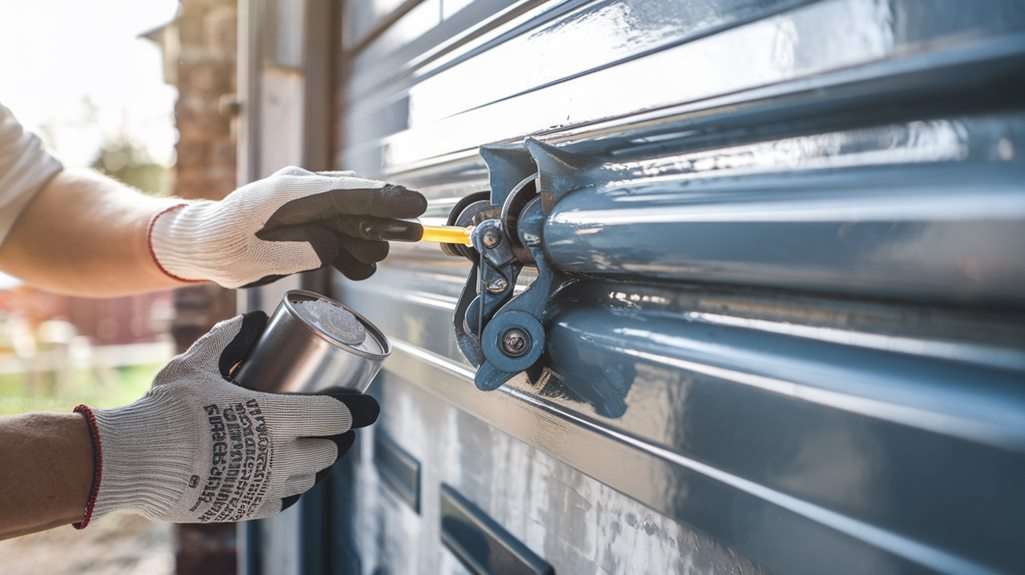
Next, start with the rollers. Apply a silicone-based lubricant to each roller, ensuring you don't oversaturate. Wipe away any excess with a cloth.
Then, move on to the hinges. Spray or apply lubricant directly to the pivot points of each hinge, allowing them to soak in for a moment.
Don't forget the tracks! Use a clean cloth to wipe down the tracks and remove any dirt or debris.
After that, apply a small amount of lubricant along the inside of the tracks, but avoid getting any on the rollers.
Key Areas to Lubricate
When it comes to keeping your garage door running smoothly, focusing on key areas to lubricate is essential. Regular lubrication reduces friction and wear, ensuring your garage door operates efficiently. Here are the main areas you should target:
- Hinges: Apply lubricant to the hinges for smoother movement as the door opens and closes.
- Rollers: Lubricate the rollers to help them glide along the tracks without sticking or grinding.
- Tracks: Use a silicone-based lubricant on the tracks to minimize friction and prevent debris buildup.
- Springs: Lightly lubricate the springs to reduce tension and prolong their lifespan.
- Lock Mechanism: Don't forget to lubricate the lock and its components to maintain security and ease of use.
Tips for Maintaining Smooth Operation
To keep your garage door operating smoothly, it's essential to stick to a regular lubrication schedule. Garage doors endure daily operation and exposure to elements, so proper lubrication enhances safety and performance.
You should also inspect the moving parts regularly to catch any issues before they become major problems. By staying proactive, you can ensure your garage door functions efficiently for years to come.
Regular Lubrication Schedule
Regularly lubricating your garage door is essential for ensuring its smooth operation and longevity. A consistent lubrication schedule not only keeps the door functioning well but also prevents unnecessary wear and tear. To maintain your garage door effectively, consider the following tips:
- Lubricate every 6 months: Make it a habit to lubricate your garage door at least twice a year.
- Check seasonal changes: During extreme weather changes, inspect and lubricate more frequently to counteract effects from heat or cold.
- Use the right lubricant: Choose a silicone-based or lithium grease specifically designed for garage doors.
- Don't forget the springs and tracks: Ensure you lubricate all moving parts, including the springs, rollers, and tracks, for optimal performance.
- Keep a maintenance log: Document your lubrication schedule to stay on track and remind yourself when the next application is due.
Inspect Moving Parts
How often do you check the moving parts of your garage door? Regular inspections are crucial for ensuring smooth operation and extending the life of your door. Start by examining the rollers, hinges, and tracks. Look for signs of wear, such as cracks or rust, as these issues can lead to bigger problems down the line.
Next, check the springs. If they're stretched or showing signs of damage, it's time to replace them. Be cautious; garage door springs are under high tension and can be dangerous if handled improperly. If you're unsure, consider calling a professional.
Don't forget to inspect the cables. Ensure they're not frayed or worn, as damaged cables can lead to malfunctioning doors.
While you're at it, check the alignment of the tracks. Misalignment can cause your door to operate unevenly, so make adjustments if necessary.
Common Mistakes to Avoid
Many homeowners make critical errors when lubricating their garage doors that can lead to unnecessary wear and tear. To ensure you're doing it right, avoid these common mistakes:
- Using the wrong lubricant: Don't use WD-40 as a lubricant; it's a solvent, not a long-term solution. Proper lubrication products are recommended for optimal performance (Garage Door Maintenance).
- Over-lubricating: Applying too much lubricant can attract dirt and debris, causing more harm than good.
- Neglecting the tracks: Many forget to clean the tracks before lubricating, which can hinder smooth operation.
- Skipping maintenance: Lubricating only once a year isn't enough. Regular upkeep is key to prolonging your door's life.
- Ignoring the weather: Extreme temperatures can affect how lubricants perform. Choose a product suited for your climate.