
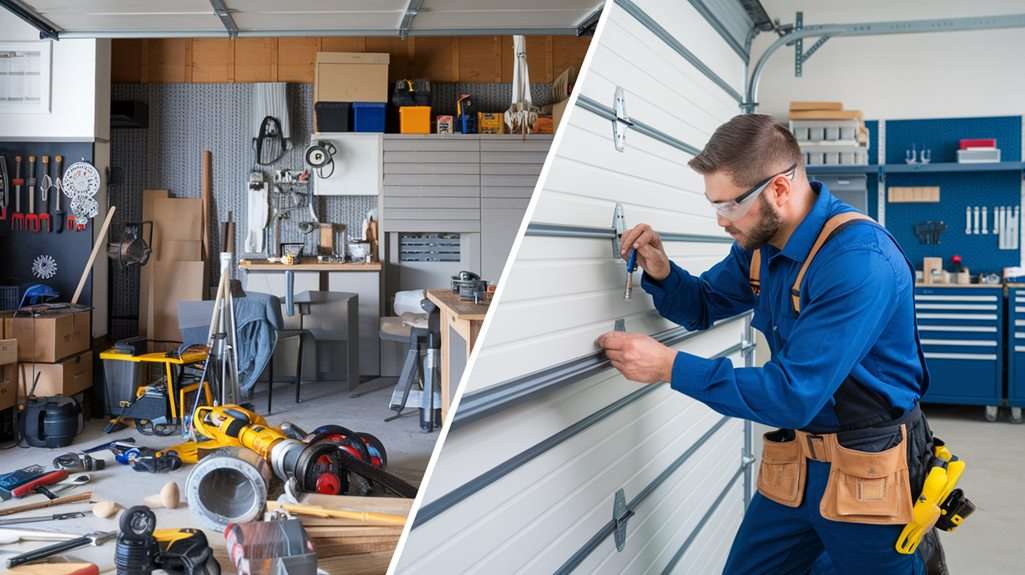
When your garage door malfunctions, you're faced with a choice: tackle the repairs yourself or hire a professional. While DIY repairs might seem cost-effective and empowering, they can also pose safety risks and lead to costly mistakes if you're not careful. On the flip side, professional services bring expertise and efficiency, but they often come with a higher price tag and potential delays. So, how do you decide what's best for your situation? Let's explore the key factors that can influence your decision.
Key Takeaways
- DIY repairs can save money and provide immediate solutions, but may lack the expertise needed for complex issues.
- Professional repairs ensure safety and quality, utilizing specialized tools and experience to resolve underlying problems effectively.
- Assess your skill level and the complexity of the issue before deciding between DIY and professional help.
- Consider potential costs: DIY can lead to tool and error expenses, while professionals may charge hourly or flat fees.
- Evaluate safety risks involved with heavy components and high-tension springs, as improper handling can lead to injuries.
Understanding Garage Door Mechanisms
Garage doors might seem straightforward, but understanding their mechanisms is crucial for effective repairs. You're dealing with a system that includes springs, cables, tracks, and rollers. Each of these components plays a vital role in how your garage door operates. Proper maintenance is key to ensuring these components work smoothly and prevent potential safety hazards (Garage Door Maintenance).
The torsion springs, for example, are responsible for lifting the heavy door. If you notice your door struggling to open, it might be a sign that these springs are worn out. On the other hand, extension springs work in a similar fashion but are mounted on the sides of the door.
Cables connect the springs to the door, and they help distribute the weight evenly. If one of these cables frays or snaps, it can lead to serious complications.
The tracks guide the door as it opens and closes, and they need to be aligned correctly to ensure smooth movement.
Lastly, rollers allow the door to glide along the tracks. When they're dirty or damaged, you'll notice a significant difference in performance. By understanding these components, you're better equipped to identify issues and make informed decisions on whether to DIY or call in a professional.
Common Garage Door Issues
Frequently, homeowners encounter a variety of common garage door issues that can disrupt daily routines. One of the most frustrating problems is a garage door that won't open or close, often stemming from a malfunctioning remote, dead batteries, or misaligned sensors.
You might also notice unusual noises, like grinding or squeaking, which can indicate worn-out rollers or a lack of lubrication. If you hear these noises, it might be time to consider professional garage door repairs to ensure your system is properly maintained and function smoothly.
Another frequent issue is a door that gets stuck midway. This can be due to a faulty opener or obstruction in the tracks. If you see gaps between the door and the floor, it could signal worn weather stripping or misalignment, leading to energy loss and pests entering your garage.
Rusty or damaged springs are also common and pose a safety risk if they break. If your door opens unevenly or shakes while in motion, it's likely a sign of a misaligned track or loose hardware. Keeping an eye on these issues can save you time and money in the long run. Addressing them promptly can prevent further damage and ensure your garage door operates smoothly.
Pros of DIY Repairs
Taking on DIY garage door repairs can be a rewarding experience for many homeowners. First and foremost, it saves you money. Instead of paying for a technician, you can tackle minor issues yourself, allowing you to allocate those savings elsewhere. Additionally, DIY repairs offer you the chance to learn something new. You'll gain hands-on experience that bolsters your confidence with home maintenance tasks.
Another significant advantage is the convenience of working on your schedule. You won't have to wait for a professional to become available, which means you can address problems as soon as they arise. This immediacy can prevent further damage, saving you time and effort in the long run.
Moreover, many resources are available online, from video tutorials to step-by-step guides. With a little research, you can find solutions tailored to your specific garage door issues, making the process smoother.
Lastly, completing repairs yourself can give you a sense of accomplishment. There's nothing quite like fixing something with your own hands, enhancing your pride in your home. So, if you're up for the challenge, embracing DIY garage door repairs can be both fulfilling and beneficial.
Cons of DIY Repairs
While DIY repairs might seem appealing, they come with several drawbacks that can complicate matters. First, you might underestimate the complexity of the job. Garage doors have intricate mechanisms, and without proper knowledge, you could end up making things worse. Second, safety is a major concern. Heavy components can cause serious injuries if mishandled, and without the right tools, you're putting yourself at risk.
Here's a quick comparison of potential issues:
| Drawback | Explanation | Potential Outcome |
|---|---|---|
| Lack of Expertise | You may not fully understand the problem | Improper repairs or further damage |
| Safety Risks | Heavy parts and high tension springs | Personal injury |
| Time Consumption | DIY can take longer than expected | Increased frustration and delays |
| Costly Mistakes | Errors can lead to expensive repairs | Higher overall costs than hiring pros |
Ultimately, while the idea of saving money may be tempting, the risks and potential complications of DIY garage door repairs often outweigh the benefits. Carefully consider your options before diving in.
Benefits of Professional Services
When it comes to garage door repairs, hiring a professional offers you expertise and experience that can make all the difference. You won't just save time; you might also find it more cost-effective in the long run.
Let's explore how these benefits, such as the personalized solutions tailored to your needs and prompt service from Supreme Garage Doors Full Garage Door Service, can ease your mind and ensure your garage door runs smoothly.
Expertise and Experience
Hiring a professional for garage door repairs offers unparalleled expertise and experience that DIY solutions often lack. When you choose to bring in a specialist, you're gaining access to a wealth of knowledge that can make all the difference in restoring your garage door efficiently and safely.
Here are four key benefits of relying on professional services:
- In-depth Knowledge: Professionals understand the intricacies of various garage door systems, ensuring they can tackle any issue that arises.
- Safety Assurance: With heavy components and high-tension springs, garage doors can be dangerous. Experts know the safety protocols to protect themselves and your property.
- Quality Tools: Professionals come equipped with specialized tools tailored for garage door repairs, allowing for a more effective and precise job.
- Long-term Solutions: Experienced technicians can identify underlying problems and prevent future issues, saving you money and stress in the long run.
Time and Cost Efficiency
One of the most significant advantages of opting for professional garage door repairs is the time and cost efficiency they provide. When you hire experts, you save valuable time. They can quickly diagnose the issue and implement a solution, often completing repairs in just a few hours.
In contrast, DIY repairs can drag on for days, especially if you're unfamiliar with the mechanisms at play.
Moreover, while the initial cost of hiring professionals might seem higher, it can actually save you money in the long run. Professionals come equipped with the right tools and parts, reducing the likelihood of costly mistakes. If you try to repair it yourself and make an error, you could end up spending more on additional parts or even causing further damage that requires professional repair anyway.
Additionally, many professional services offer warranties on their work, giving you peace of mind and protecting your investment. So, when you weigh the time and financial aspects, going with a professional service often proves to be the smarter choice. You'll get the job done efficiently, effectively, and without the hassle of trial and error.
Drawbacks of Professional Repairs
Often, opting for professional garage door repairs can come with significant drawbacks that may not be immediately obvious. While you might believe you're making a smart choice, there are several factors to consider.
- Scheduling Delays: You may have to wait days or even weeks for a technician to fit you into their schedule, leaving you without a functional garage door for longer than expected.
- Limited Control: When you hire someone else, you lose control over the repair process. You may not agree with their methods or the parts they choose to use.
- Inconsistent Quality: Not all professionals are created equal. You might end up with subpar workmanship if you don't thoroughly vet the repair service beforehand.
- Hidden Fees: You could encounter unexpected charges that weren't mentioned upfront, leading to a final bill that's much higher than you anticipated.
Before deciding on professional repairs, weigh these drawbacks carefully. Sometimes, tackling the repairs yourself can offer a more satisfying and efficient solution to your garage door issues.
Cost Comparison
When considering garage door repairs, you'll want to weigh the costs of DIY fixes against hiring a professional. DIY repairs can save you money upfront, but they may come with hidden expenses if things go wrong.
On the other hand, professional services offer expertise but often come with a higher price tag, so it's crucial to evaluate what fits your budget best.
DIY Repair Expenses
Considering a DIY garage door repair can save you money, but it's essential to weigh the costs carefully. While you might think you're getting a bargain, various expenses can add up quickly. Here's a breakdown of potential DIY repair costs you should consider:
- Tools: If you don't already own the necessary tools, buying them can set you back significantly. A basic toolkit can cost you anywhere from $50 to $200.
- Parts: Depending on the issue, replacement parts might be needed. Springs, cables, or rollers can range from $10 to $100 each, depending on quality.
- Time: Factor in the time you'll spend researching, purchasing, and executing the repair. Your time has value, and you might end up spending more hours than anticipated.
- Mistakes: If something goes wrong, you could cause additional damage, leading to higher repair costs later. It's crucial to consider the possibility of needing professional help after a failed DIY attempt.
Professional Service Pricing
Hiring a professional for garage door repairs can lead to a more reliable outcome, but it's essential to understand the associated costs. Typically, professional services charge between $75 to $150 per hour, depending on the complexity of the job and your location. For simple repairs, you might find that a flat fee of around $100 to $200 is common.
However, if you're dealing with more significant issues, like spring replacements or motor repairs, costs can quickly escalate to $300 or more.
It's vital to consider additional fees as well. Many companies charge for service calls, which can add another $50 to $100 to your bill. If parts need replacing, those costs will vary based on the brand and model of your garage door. Always ask for a detailed estimate before committing.
While DIY repairs might seem cheaper upfront, remember that professionals bring expertise that can save you money in the long run by preventing future issues. Weigh your options carefully and consider the value of your time and peace of mind when deciding between DIY and hiring a pro.
Making the Right Choice
Deciding between DIY garage door repairs and calling in a professional can be tricky. You want to save money, but you also want to ensure the job gets done right. Here are some key factors to consider before you make your choice:
- Skill Level: Evaluate your experience with tools and repairs. If you're handy and have tackled similar projects before, DIY might be a safe bet.
- Complexity of the Issue: Identify the problem. Simple tasks like replacing a spring can be manageable, while more complex issues, like electrical components, may require expert knowledge.
- Time Commitment: Consider how much time you can dedicate. If your schedule is tight, hiring a professional might save you valuable hours.
- Safety Risks: Assess potential hazards. Garage doors can be heavy and dangerous to work on. If you're unsure, it's better to leave it to the pros.
Weigh these factors carefully, and you'll be better equipped to make the right choice. Remember, sometimes it's worth investing in a professional to avoid future headaches and ensure safety.