Did you know that nearly 30% of homeowners experience garage door issues each year? If you're part of this statistic, it's crucial to recognize the warning signs before they escalate into costly repairs. You might notice unusual noises, a door that won't open or close, or even slow response times. These symptoms often indicate underlying problems that require professional attention. By familiarizing yourself with the top signs, you can ensure your garage door operates safely and efficiently. So, what are the key indicators that signal it's time to call in the experts?
Key Takeaways
- The garage door fails to open or close properly, indicating a potential malfunction that requires immediate attention.
- Unusual noises, such as grinding or scraping, during operation can signal mechanical issues needing professional repair.
- Visible damage, such as dents or warping, on the door or tracks suggests serious structural problems that should be addressed.
- Frequent remote control malfunctions or slow response times indicate underlying electrical issues that may necessitate expert assistance.
- Signs of misalignment, such as gaps when closed or excessive vibration, can compromise safety and need prompt professional evaluation.
Unusual Noises When Operating
You might notice that your garage door makes unusual noises when it operates, and that's a clear sign something's off. These sounds can range from grinding and squeaking to banging or rattling. Each noise indicates a different issue that needs attention.
For instance, if you hear a grinding noise, it could mean that the rollers or tracks are worn out. Squeaking noises often point to lack of lubrication on the moving parts, which can lead to more serious problems if not addressed.
Banging or rattling sounds might suggest loose hardware or misalignment, making it crucial to inspect the components for any signs of damage. Ignoring these noises can escalate the problem, resulting in costly repairs down the line.
It's essential to regularly maintain your garage door to prevent these issues from arising. Pay attention to any changes in sound during operation; they can be your first clue that something requires professional evaluation. Don't hesitate to call in a technician if you're unsure. Addressing these unusual noises early can save you time, money, and hassle in the long run.
Door Won't Open or Close
A garage door that won't open or close is more than just an inconvenience; it signals a potentially serious issue. When you press the remote or the wall button and nothing happens, it can be frustrating and alarming.
First, check the power source. Ensure the opener is plugged in and the circuit breaker hasn't tripped. If everything seems fine, inspect the remote batteries. Dead batteries can lead to a door that won't respond. Additionally, strange noises or jerky movements during operation can indicate underlying issues.
Next, look at the sensors. If they're misaligned or obstructed, your door won't function properly. Clear any debris or reposition the sensors to ensure they're aligned correctly.
You should also consider the door's manual release mechanism. If the door is disengaged from the opener, it won't respond to commands. Try pulling the release cord and see if you can manually operate the door.
If these quick checks don't resolve the issue, it may be time to call in a professional. A malfunctioning garage door could indicate problems with the springs, cables, or opener itself, and ignoring it can lead to more costly repairs down the line. Don't hesitate to seek help when needed.
Slow Response Time
If you notice your garage door takes longer than usual to open or close, it might be time to take a closer look. Delayed responses can indicate underlying issues, especially if you hear unusual noises during operation or experience inconsistent remote functionality.
Regular maintenance, as outlined by Supreme Garage Door, can help address these issues promptly and prevent them from escalating. Ignoring these signs can lead to bigger problems down the road, so addressing them promptly is crucial.
Delayed Opening and Closing
When experiencing delayed opening and closing of your garage door, it can be more than just an inconvenience; it often signals a need for professional repair. You might notice that your door doesn't respond promptly when you press the remote or wall button. This lag can stem from several issues, including problems with the door's motor or the sensors that ensure safe operation.
A slow response time can lead to frustration, especially when you're in a hurry. It might also create safety concerns, as a garage door that doesn't open or close reliably can pose risks to you, your family, or your belongings. You wouldn't want to be caught in the middle of a busy day, waiting for your garage door to finally respond.
Another consideration is the potential for further damage. If the door struggles to operate, components may wear down faster, leading to more costly repairs down the line.
If you notice these delays, it's best to consult a professional. They can diagnose the issue accurately and restore your garage door's functionality, ensuring it operates smoothly and efficiently once again. Don't wait; address the problem before it escalates.
Unusual Noise During Operation
Hearing unusual noises during the operation of your garage door can be alarming and often indicates underlying issues that need professional attention. If your door is making grinding, squeaking, or banging sounds, it's a clear sign something's not right. These noises could stem from worn-out rollers, loose hardware, or even misalignment within the tracks.
You might notice a slower response time when these noises occur. For instance, if your door hesitates before moving or seems to struggle while opening or closing, it's crucial to address this immediately. Ignoring these sounds can lead to more significant problems down the line, like a complete breakdown of the door mechanism.
Additionally, unusual noises frequently suggest that lubrication is needed or that parts are starting to wear out. Don't wait until the problem escalates; if you hear these sounds, it's best to consult a professional. They can diagnose the issue and ensure your garage door operates smoothly and safely.
Inconsistent Remote Functionality
Inconsistent remote functionality can be frustrating, especially when you're left waiting for your garage door to respond. If you find yourself pressing the button multiple times or standing outside in the rain, something's off. This slow response time often indicates underlying issues that need attention.
First, check your remote's batteries. Weak batteries can lead to intermittent signals. If that doesn't solve the problem, the issue may lie in the remote's programming or frequency interference. Sometimes, other devices can disrupt the signal, such as nearby radios or Wi-Fi networks.
Another common culprit is the garage door opener itself. If it's aging or has faulty components, it may not communicate effectively with the remote. You might also want to inspect the antenna on the opener; if it's damaged or blocked, it can weaken the signal.
Ignoring inconsistent remote functionality can lead to more significant problems down the line. It's best to consult a professional who can correctly diagnose and fix the issue before it escalates. Taking action now can save you from being stuck outside your garage when you need to get in.
Visible Wear and Tear
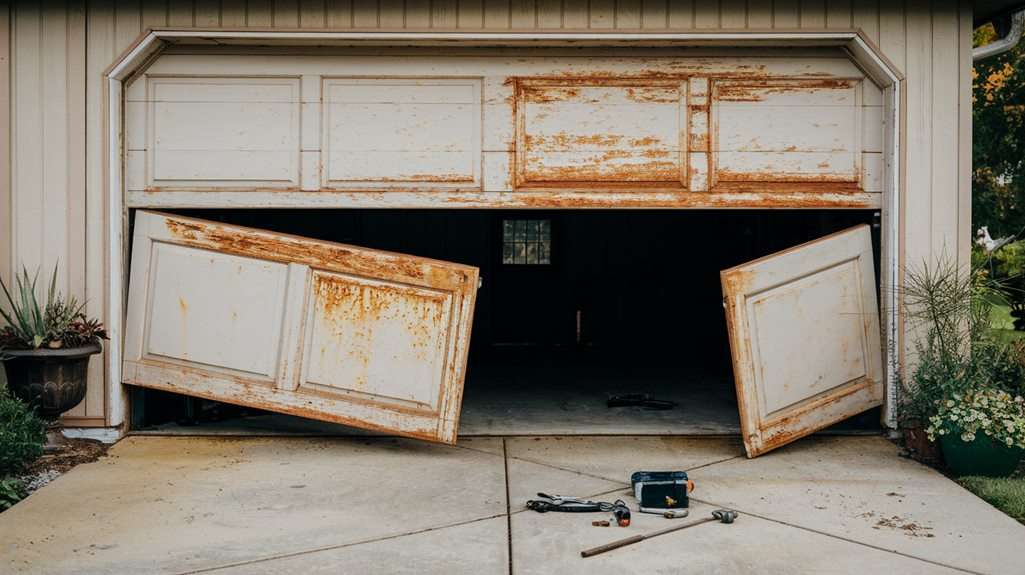
Although you mightn't notice it at first, visible wear and tear on your garage door can signal the need for professional repair. Take a closer look at your door's surface; if you see dents, scratches, or rust, these are clear indicators that it's time to act. Over time, weather elements can cause paint to chip and metal to corrode, which not only affects the door's appearance but also its functionality and longevity.
Don't ignore frayed cables or damaged panels, as these issues can escalate quickly. Cracks in the frame or panels can compromise the door's integrity, leading to potential safety hazards. If your door is wooden, keep an eye out for signs of rot or warping, as these can weaken its structure.
You should also check the hardware, like hinges and rollers, for signs of wear. If they look worn or rusty, replacing them can enhance your garage door's performance. Addressing visible wear and tear promptly can help prevent more serious problems down the line, saving you time and money.
If you notice significant damage, consult a professional to assess the situation and recommend the best course of action.
Misalignment or Gaps
If you notice your garage door isn't lining up properly or has noticeable gaps, it's time to pay attention. Misalignment can prevent your door from closing securely, leaving your garage vulnerable to intruders and the elements.
You might see uneven spacing between the door and the frame, or perhaps one side seems to hang lower than the other. This misalignment can stem from various issues, such as worn-out rollers, damaged hinges, or even the door itself settling over time.
If you spot gaps, particularly at the bottom or sides of the door, it's a clear sign that something's off. Not only does this create security risks, but it can also lead to energy inefficiency, as conditioned air escapes through those openings.
Don't attempt to fix this on your own; adjusting the garage door's alignment often requires specialized tools and expertise. A professional can assess the situation and determine whether a simple adjustment will suffice or if parts need replacing.
Ignoring these signs could lead to more significant problems down the road, so act promptly to ensure your garage door operates safely and effectively.
Remote Control Malfunctions
Misalignment and gaps in your garage door can lead to a host of issues, and one of the most frustrating problems that can arise is remote control malfunctions. If you find yourself repeatedly pressing the button on your remote with no response, it's time to investigate. This issue can stem from several factors, including dead batteries, interference from other devices, or faulty wiring.
Start by checking the batteries in your remote. If they're dead, replacing them might resolve the problem immediately. If that doesn't work, look for any obstructions or interference that could be affecting the signal. Sometimes, other electronic devices can disrupt the communication between your remote and the garage door opener. Additionally, for personalized solutions tailored to your needs, consider reaching out to Supreme Garage Doors for expert assistance.
If you've ruled out these common issues and your remote still isn't functioning, the problem might lie within the garage door opener itself. Loose wiring or damaged components can prevent the system from receiving signals. In this case, it's best to call a professional.
Ignoring remote control malfunctions can lead to bigger problems down the line, so addressing it promptly ensures your garage door operates smoothly and securely.
Excessive Vibration
If you notice excessive vibration when your garage door operates, it's crucial to address it promptly. This issue can stem from various causes, such as loose components or misaligned tracks, and it could pose safety risks for you and your family. Ignoring these vibrations might lead to more significant problems down the line, so it's best to consult a professional.
Causes of Vibration
Excessive vibration often signals underlying issues with your garage door system. When you notice your door shaking or rattling, it's essential to identify the causes to prevent further damage. Here are some common culprits of vibration:
- Worn-out Rollers: Over time, garage door rollers can wear down, causing them to not glide smoothly along the tracks. This results in increased vibration during operation.
- Misaligned Tracks: If the tracks are misaligned, the garage door may not move correctly, leading to shaking. Regular maintenance can help keep the tracks straight.
- Loose Hardware: Bolts, screws, and other hardware can loosen over time. If they're not tightened, they can contribute to excessive vibrations when the door operates.
- Unbalanced Door: An unbalanced garage door can cause stress on the opener and the entire system, leading to vibrations. Regularly checking the balance can prevent this issue.
Safety Risks Involved
Vibration in your garage door isn't just an annoying sound; it can pose serious safety risks. When your door vibrates excessively, it indicates underlying issues that can lead to malfunctions and accidents.
For instance, loose components may cause the door to become unstable, increasing the chance of it falling unexpectedly. This could injure anyone nearby, including you, your family, or pets.
Moreover, excessive vibration can damage the door's tracks and springs, potentially leading to a complete door failure. If this happens while you're using the door, it can create a dangerous situation.
You might find yourself trapped inside or outside your garage, unable to secure your belongings or access your home safely.
Ignoring these warning signs can escalate problems and lead to costly repairs. It's crucial to address excessive vibration promptly by contacting a professional. They can identify the root cause and ensure your garage door operates smoothly.
Don't compromise your safety—take action as soon as you notice any unusual vibrations in your garage door. Being proactive not only protects your property but also keeps you and your loved ones safe.
Safety Sensors Not Working
Many homeowners overlook the importance of garage door safety sensors, but when they start malfunctioning, it can lead to serious safety hazards. These sensors are designed to prevent the door from closing on objects or people in its path, so if they're not working properly, you're at risk for accidents.
Here are four signs that your safety sensors may need professional attention:
- Inconsistent Operation: If your garage door opens and closes erratically, this could indicate sensor issues.
- No Response: When you press the remote, and the door doesn't move at all, the sensors might be misaligned or damaged.
- Blinking Lights: If the indicator lights on the sensors are blinking continuously, it's a sign that something's wrong.
- Obstruction Detection: The door should reverse if it detects an obstruction. If it doesn't, the sensors may be malfunctioning.
Ignoring these signs can lead to injuries or damage to your property. If you notice any of these issues, it's best to call a professional to ensure your safety sensors are in proper working order.
Rust or Corrosion Present
When you notice rust or corrosion on your garage door, it's a sign that it may need professional repair. Ignoring this issue can lead to further damage, affecting both the door's functionality and appearance. Rust forms when moisture interacts with metal, and if left untreated, it can weaken the door structure over time.
You might see rust spots or flaking paint, indicating that the protective coating has worn away. Even if the rust seems minor, it can spread quickly, leading to costly repairs down the line. It's essential to address rust issues sooner rather than later.
If your garage door is made of steel, you should pay extra attention. Aluminum doors can also corrode, but they may not show it as visibly. Look for signs of pitting or discoloration, which can indicate corrosion beneath the surface.
Professional repair services can assess the extent of the damage and recommend appropriate measures. They can either sand down the rust, apply protective coatings, or even replace affected panels. Taking action now can save you from more significant problems in the future. Don't wait—ensure your garage door remains safe and functional.
Frequent Need for Adjustments
If you're constantly adjusting your garage door to keep it functioning properly, it's a clear sign that professional repair is needed. Frequent adjustments might make you feel like you're tackling a never-ending problem, but the underlying issues could be more serious than you think.
Here are some common reasons why your garage door might require constant tinkering:
- Misaligned Tracks: If the tracks aren't aligned, your door might struggle to open or close smoothly, leading to repeated adjustments.
- Worn Out Rollers: Old or damaged rollers can cause your door to stick or jump, necessitating frequent fixes.
- Broken Springs: If your springs are wearing out, they won't support the door properly, making adjustments a regular task.
- Faulty Opener: An unreliable garage door opener can lead to erratic performance, forcing you to adjust settings repeatedly.
If you're experiencing any of these issues, it's time to call in professionals. They can diagnose the problem accurately and ensure your garage door operates smoothly without all that extra effort on your part. Don't wait until it gets worse!